GEO and AEO in 2026: How to Get Your Business Cited by ChatGPT, Perplexity, and AI Overviews
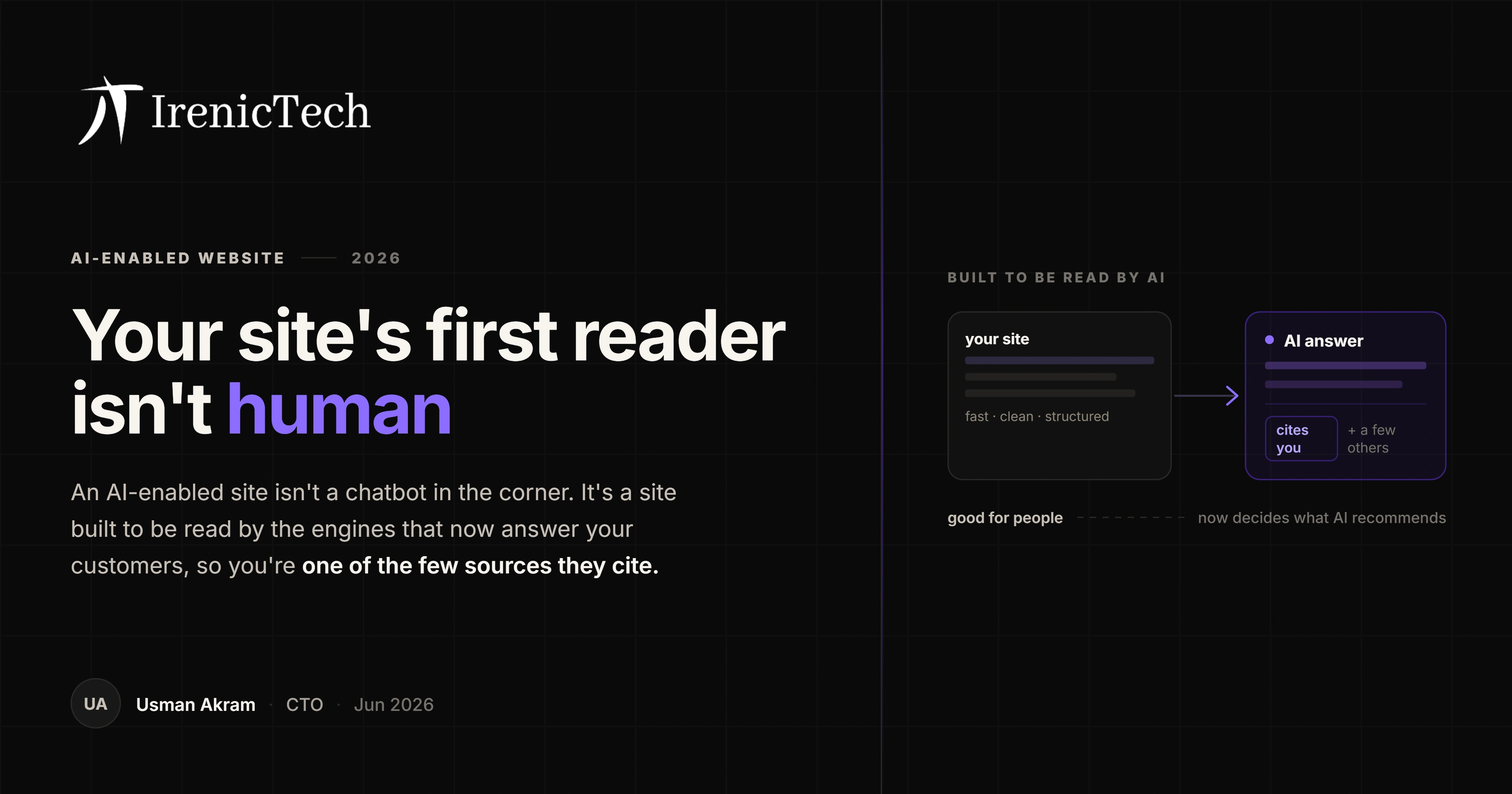
Search is turning into answers, and answers cite only a few sources. This is a practical, no-fluff playbook for getting your business cited by ChatGPT, Perplexity, and Google's AI Overviews, without chasing every acronym.
Usman Akram · · 5 min read
For about twenty years, the goal of SEO was simple to state: rank as high as you can, and earn the click. That bargain is quietly breaking. More and more, someone asks a question and never sees a list of links at all. They get an answer, assembled on the spot, with a few small citations tucked underneath. If your business isn't one of those citations, you may as well not exist for that question.
That's the shift GEO and AEO are responding to. The acronyms are new and a little overcooked, but the problem underneath them is real, and it's worth understanding before you spend a dirham or a dollar chasing it.
The short version
Answer engines like ChatGPT, Perplexity, and Google's AI Overviews don't show ten results. They synthesize one answer and credit a few sources. So the question is no longer "how do I rank?" It's "how do I become one of the handful of sources the answer is built from?" You get there by being genuinely useful, clearly structured, and credible enough that the model trusts you, the same fundamentals as good SEO, pointed at a smaller target.
What's actually changing
The number people keep quoting is Gartner's, which back in early 2024 predicted traditional search volume would fall around 25% by 2026 as AI assistants took over more queries. Treat that as a forecast, not a measured fact, and notice that even the trade press has pushed back on the exact figure. But you don't need the precise number to feel the direction. Anyone who's watched their own search habits change knows clicks are leaking out of the blue links and into the answers.
What matters for you is the consequence. When a search returned ten links, being fourth or fifth still got you traffic. When a search returns one answer with three citations, fourth place is nowhere. The distribution got brutally top-heavy, and that's the whole reason this is worth your attention.
How answer engines decide who to cite
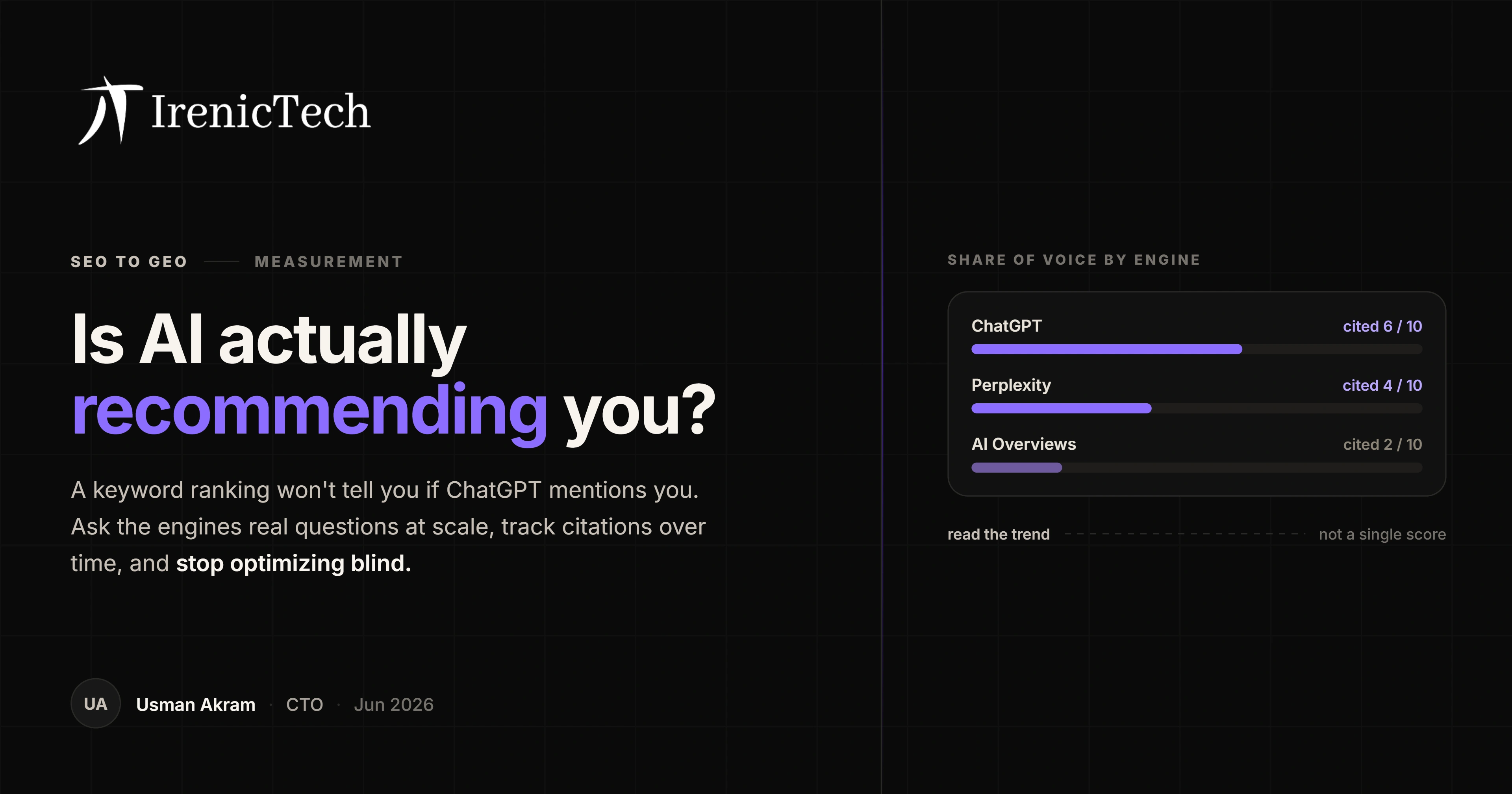
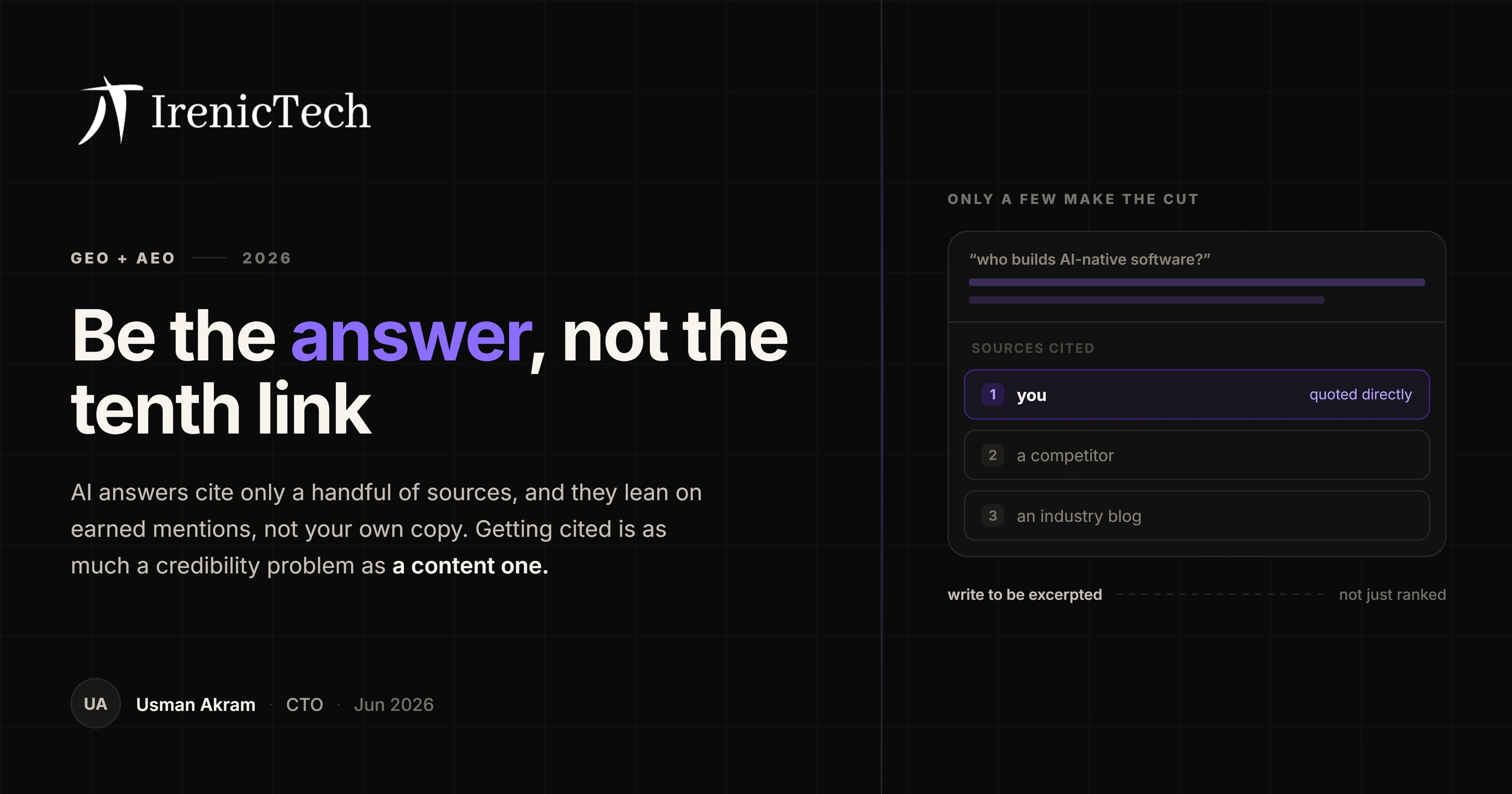
Here's the part that trips up most businesses. These engines don't cite the company that says the nicest things about itself. They cite sources they judge relevant and trustworthy, and most answers pull from only a small set of domains, often somewhere in the range of two to seven, with Perplexity tending to cite more than the others. A few slots, decided by the model, per question.
And they lean heavily on what other people say about you, not what you say about yourself. Independent coverage, mentions in respected publications, references on sites that aren't yours, those carry weight precisely because you didn't write them. That's an uncomfortable truth for anyone used to controlling the message on their own domain. Getting cited is partly a content problem and partly an old-fashioned credibility problem.
What actually gets you cited
None of this rewards tricks. It rewards being the kind of source a careful researcher would quote, which, conveniently, is exactly what these models are imitating. In practice that means:
- Answer the question, fast and plainly. Lead a page with a direct, self-contained answer a model can lift in one piece, then expand. Burying the point under five paragraphs of throat-clearing is how you get skipped.
- Write to be excerpted. Clear headings phrased as the questions people actually ask, short quotable passages, real numbers with sources. If a paragraph can't stand on its own when pulled out, it won't get pulled.
- Show real expertise, not keyword density. Specifics, opinions, and the kind of detail that only comes from doing the work. Generic content is exactly what the model can already generate itself, so it has no reason to cite it.
- Structure the page properly. Clean headings, sensible markup, and structured data where it fits. This is the part where the technical control you get from a well-built site quietly pays off, because a model parses a clean page far more reliably than a cluttered one.
- Earn mentions you didn't write. Get quoted, get linked, get referenced by people who aren't you. This is the slow, unglamorous work, and it's also the part competitors find hardest to fake.
- Keep it current. Stale facts get distrusted and dropped. Anything tied to a date needs a maintenance plan, not a publish-and-forget.
SEO didn't die, it changed jobs
It's tempting to read all this as "SEO is over." It isn't. People still search, rankings still matter, and a healthy, fast, well-organized site is still the foundation. What changed is the finish line. The goal used to be the click. Now it's increasingly the citation, being the thing the answer is made of.
The good news, if you've done the real work, is that the two goals barely conflict. The same content that ranks because it's genuinely useful is the content that gets cited because it's genuinely useful. The businesses that gamed search with thin, keyword-stuffed pages are the ones in trouble, because there's nothing in that content worth quoting.
How to start
Pick the handful of questions you actually want to be the answer to, the ones where a good answer turns into a customer. Write the best, clearest, most genuinely expert page on the internet for each of them. Make those pages fast and easy to parse. Then go earn credible mentions that point back to your expertise. That's the whole playbook, and most of it is just doing the fundamentals with more discipline than your competitors can be bothered to.
If that sounds like work, it is, and it's the kind of work we build into the sites we ship, because a fast, well-structured, genuinely useful site is the precondition for all of it. If you want a straight read on where your site stands and what it would take to start showing up in AI answers, tell us what you're working on and book a discovery call.
Frequently asked
What is the difference between SEO, AEO, and GEO?
SEO (search engine optimization) is getting your pages to rank in a list of blue links. AEO (answer engine optimization) is getting your content used as the direct answer to a question, whether in a featured snippet or an AI response. GEO (generative engine optimization) is the newest term and focuses specifically on being cited inside answers generated by tools like ChatGPT, Perplexity, and Google's AI Overviews. They overlap heavily; in practice you optimize for all three with the same fundamentals.
How do AI engines decide which sources to cite?
They pull from a small set of sources they judge relevant and trustworthy, and they tend to favour content that directly answers the question, comes from a credible domain, and is backed by third-party mentions elsewhere on the web. Most answers cite only a handful of domains, so being broadly visible and clearly authoritative matters more than ranking on page one of traditional search.
Can you guarantee my business gets cited by ChatGPT or Perplexity?
No, and anyone promising a guarantee is selling something. AI citations are probabilistic and the models change constantly. What you can do is stack the odds: publish genuinely useful, well-structured content that answers real questions, earn credible third-party mentions, and keep your information accurate and current. That's what makes a source the kind these engines reach for.
Is traditional SEO dead in 2026?
No, but its job changed. People still search, and ranking still matters, but a growing share of queries now end in an AI-generated answer instead of a click. So the goal shifts from 'rank and get the click' to 'be the source the answer is built from.' The fundamentals that earned rankings, useful content, technical health, and credibility, are the same ones that earn citations.
CTO, IrenicTech
Usman is the CTO of IrenicTech. He builds AI agents, RAG systems, and automations into web and mobile products, and gets them shipped in weeks instead of quarters. He's focused on AI that learns from the people using it, and that's secure enough to trust with real data.
Connect on LinkedIn