What Is Agentic AI Development in 2026? Orchestration, MCP, and Multi-Agent Teams Explained
Agentic AI development moved from autocomplete to orchestration in 2026. Here's what an AI agent actually is, where MCP and multi-agent teams fit, and what it means for building real software, without the hype.
Usman Akram · · 6 min read
"Agentic AI" is one of those phrases that gets stretched until it means nothing. A chatbot with a fancy prompt gets called an agent. So does a fully autonomous system rewriting a codebase overnight. Both can't be true, so it's worth naming what an agent actually is before deciding what to build with one.
What is agentic AI development?
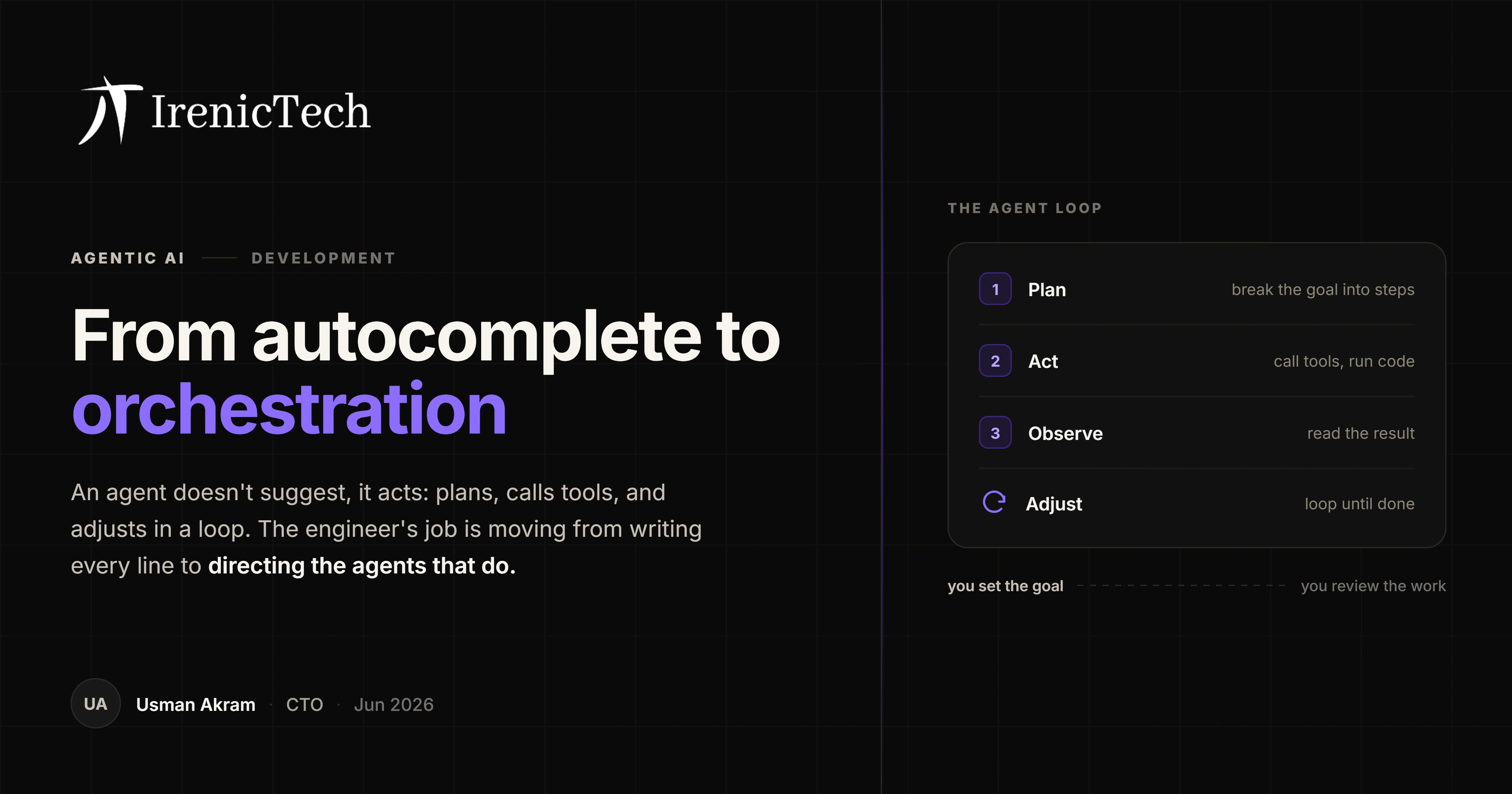
Agentic AI development is building software where the AI acts as an agent: you give it a goal, it makes a plan, it calls tools and APIs to carry that plan out, it looks at the result, and it adjusts until the job is done. The difference from a chatbot is simple. A chatbot returns text. An agent takes actions.
That loop is the whole idea. The model doesn't just answer you, it keeps going on its own until it thinks it's finished. Everything else, which tools it can reach, how much it's allowed to do unsupervised, who checks its work, is detail hanging off that one shift from answering to doing.
Assistant, agent, orchestration: three different things
Most confusion comes from collapsing three distinct levels into one word. They're not the same, and they don't carry the same risk.
| Level | What it does | Who's in control | Example |
|---|---|---|---|
| Assistant | Answers one request at a time | You, every step | "Write this function," then you review it |
| Agent | Runs a multi-step loop toward a goal | The agent, you review | "Fix this failing test suite," it works alone |
| Orchestration | Coordinates multiple agents on a larger objective | You direct the system | A team of agents migrates a service, in parallel |
An assistant suggests and waits. An agent is handed an outcome and runs until it decides it's finished. Orchestration is the 2026 frontier: instead of one agent, you run several, each owning a slice of the work, with a human directing the system rather than typing every instruction. The autonomy goes up at each level, and so does the need for scoped permissions and review.
The honest state of play in 2026
The hype tends to skip the most useful fact about agentic development in 2026: it's supervised collaboration, not hands-off automation, and the people doing it for real will tell you so.
Anthropic's own research is the clearest signal. Developers now use AI for roughly 60% of their work, but report being able to fully delegate only 0% to 20% of tasks. Sit with those two numbers for a second. AI is doing a lot, and a human is still checking almost all of it. Anyone selling you the fully autonomous version is describing a demo, not a Tuesday.
What's actually changing isn't the disappearance of the engineer. It's the engineer's job. The work is shifting from writing every line to defining the goal, choosing the tools the agent can touch, orchestrating long-running systems of agents, and reviewing what comes back. Less typing, more directing. The teams getting real value treat agents like fast, capable, occasionally overconfident teammates, not like a vending machine for finished software.
What is MCP, and why does it keep coming up?
An agent is only as useful as the things it can reach. A model that can reason brilliantly but can't query your database, open a pull request, or read your docs is a clever conversationalist, not an agent. Connecting it to real tools is where the value lives, and that's the problem MCP solves.
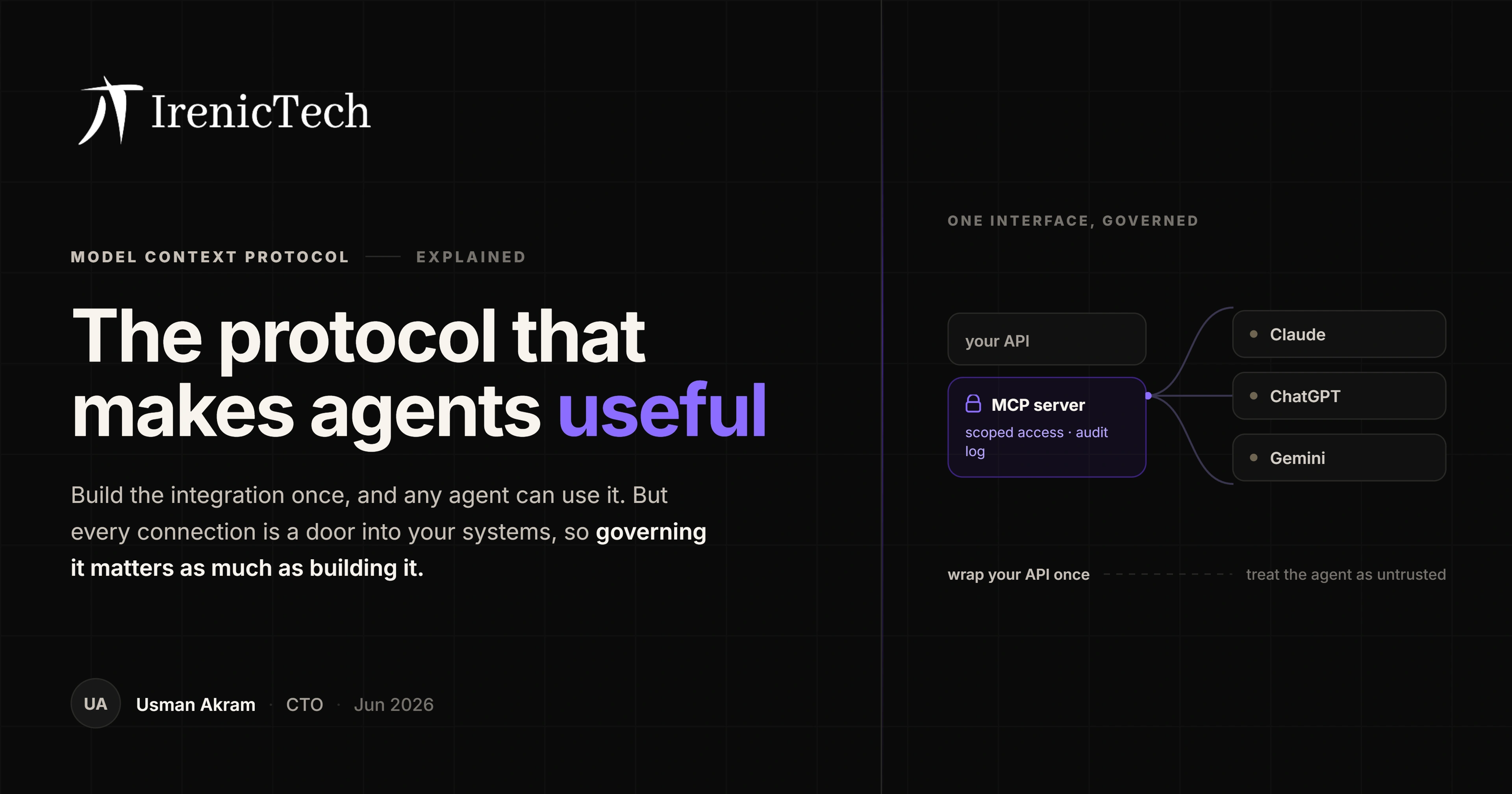
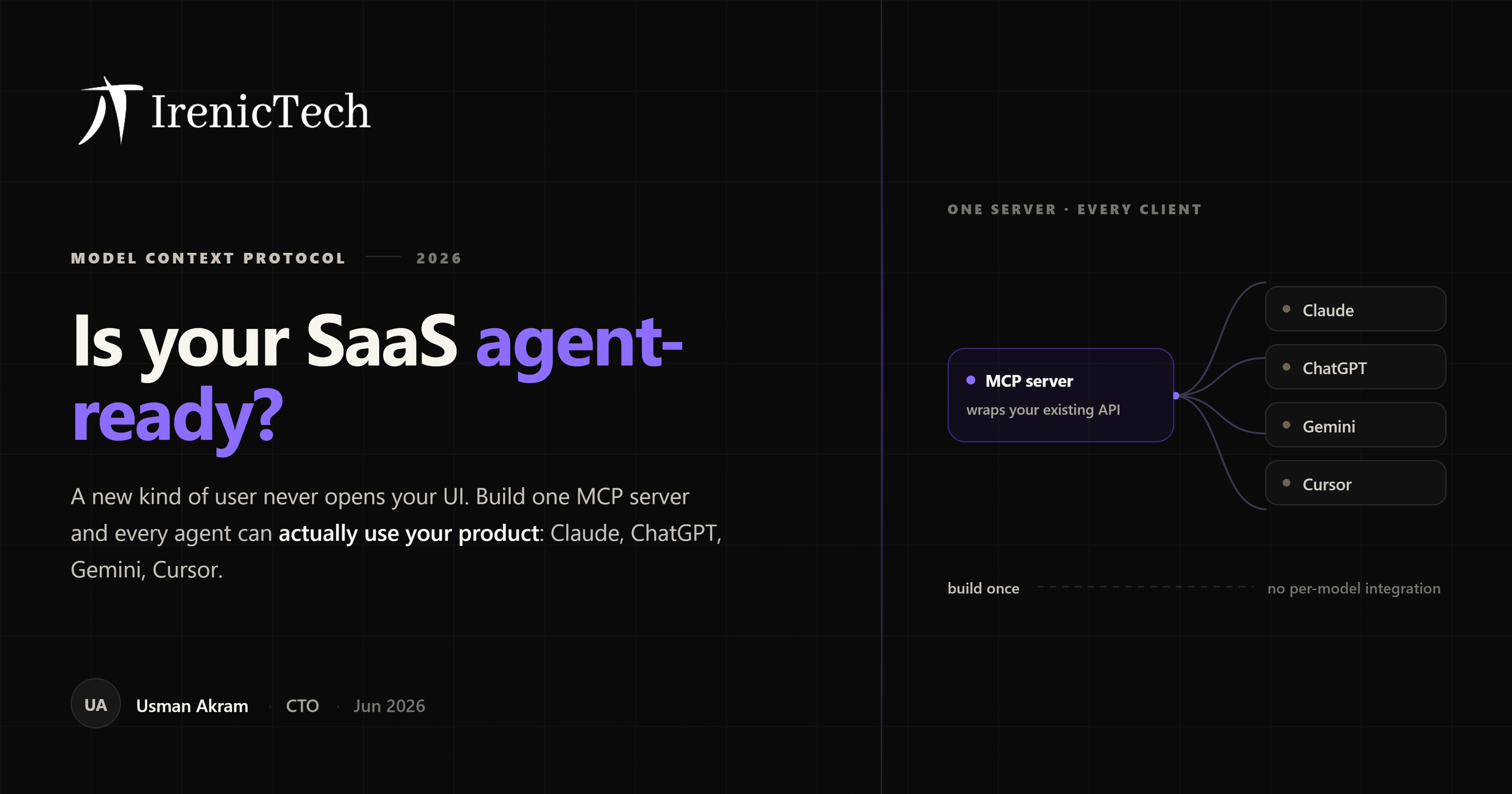
The Model Context Protocol (MCP) is an open standard, introduced by Anthropic in late 2024 and now stewarded by the Linux Foundation, that defines how agents connect to external tools, data, and services. Before it, every integration was bespoke glue code. With it, a tool exposes one consistent interface that any compliant agent can use. That standardization is exactly why agents went from demo to genuinely useful inside real businesses this year, and it's why we wrote a whole piece on making your SaaS agent-ready with MCP.
The flip side is governance. Every MCP connection is a door into your systems. As teams wire up dozens of them, "which agents can reach what, and who approved that" stops being a detail and becomes a security posture. The organizations doing this well are putting registries, scoped permissions, and review in front of their MCP connections rather than letting them sprawl.
From one agent to a team
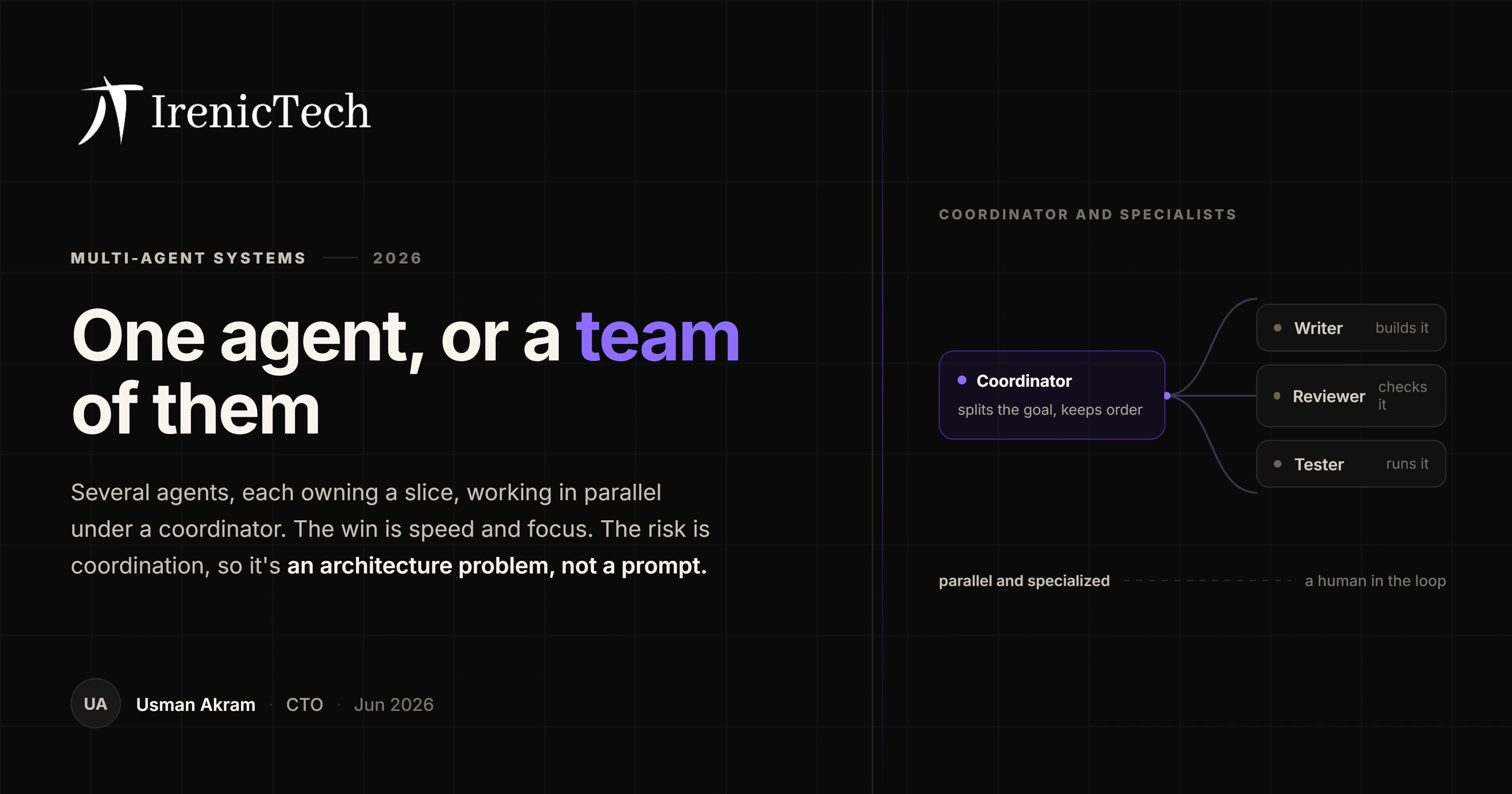
The leap people underestimate is from a single agent to a coordinated team of them. One agent fixing a bug is useful. Several agents working in parallel, one writing code, one writing tests, one reviewing, with a longer-running process holding the plan together, is a different category of capability.
This is where 2026 is heading: long-running, multi-agent systems that a human orchestrates rather than micromanages. It's genuinely powerful, and it's also where things go quietly wrong if nobody designed for it. Agents step on each other's work. A decision gets made and nobody can say which agent made it. Something ships and there's no record of why. Multi-agent orchestration is an engineering discipline, not a clever prompt, and the architecture around the agents, how they coordinate and what they're allowed to do, ends up mattering more than which model you picked.
What this means if you're building a product
If you're a business deciding what to do with all this, three things follow.
First, agentic features are becoming table stakes, not a moonshot. Gartner expects roughly a third of enterprise software to include agentic AI by 2028, up from almost none in 2024. The question is shifting from "should we" to "where, and how safely."
Second, "safely" is the hard part, and it's the part that gets skipped. Gartner also predicts that by 2028, a quarter of enterprise breaches will trace back to AI agent abuse. An agent with too much access is one confused instruction away from a bad day, which is the same lesson we keep hammering on in shipping AI-built apps without the breach. Least privilege, audit trails, and human review aren't optional add-ons here. They're the difference between an agent that helps and a liability that compiles.
Third, the value isn't in adopting a tool, it's in the system you build around it. Off-the-shelf agents are easy to switch on. An agent that actually understands your domain, connects safely to your data, and reaches production with the right guardrails is an engineering project. That's the work, and it's the work we like.
How to start without getting burned
Pick one narrow, genuinely useful job, not "an AI agent for the whole company." Give the agent the smallest set of tools and permissions that job needs. Put a human in the review loop from day one. Log what it does. Then widen the scope only once you trust the loop, the same way we scope any AI-native product: one useful slice, shipped to real users, before anything ambitious.
Agentic AI is real, and 2026 is the year it stopped being a demo. But the teams getting durable value from it aren't the ones who handed an agent the keys and walked away. They're the ones who treated it like what it is, a fast, capable collaborator that still needs an engineer directing and checking it.
If you're trying to figure out where an agent actually fits in your product, and how to ship it without opening a hole in your business, that's exactly the conversation we have with clients. Tell us what you're building and book a discovery call, and we'll give you a straight answer for your case.
Frequently asked
What is agentic AI development?
Agentic AI development is building software where an AI model acts as an agent: it takes a goal, makes a plan, calls tools and APIs to carry it out, observes the result, and adjusts in a loop until the job is done. It differs from a chatbot or autocomplete because the AI takes actions in the world rather than just returning text. In practice it means designing the tools, permissions, and guardrails an agent operates within, not just prompting a model.
What is the difference between an AI assistant and an AI agent?
An assistant responds to a single request and waits for the next one; you stay in control of every step. An agent is given an outcome and runs a multi-step loop on its own, deciding which tools to call and when it's finished. The assistant suggests; the agent acts. The trade is autonomy for oversight, which is why agents need scoped permissions and review, not blind trust.
What is MCP (Model Context Protocol) and why does it matter?
MCP is an open standard, introduced by Anthropic in late 2024 and now stewarded by the Linux Foundation, that defines how AI agents connect to external tools, data, and services. It matters because it turns every integration into a reusable, consistent interface instead of bespoke glue code, which is what makes agents genuinely useful inside a real business. It also creates a governance need: every MCP connection is a door into your systems that has to be secured.
Is agentic AI ready to replace developers in 2026?
No. The 2026 evidence points to supervised collaboration, not replacement. Anthropic's data shows developers using AI for about 60% of their work but able to fully delegate only 0% to 20% of tasks. Agents handle more of the implementation, while people move up to defining the goal, orchestrating the agents, and reviewing what they ship. The skill in demand is directing agents well, not competing with them.
CTO, IrenicTech
Usman is the CTO of IrenicTech. He builds AI agents, RAG systems, and automations into web and mobile products, and gets them shipped in weeks instead of quarters. He's focused on AI that learns from the people using it, and that's secure enough to trust with real data.
Connect on LinkedIn