Dubai's Agentic AI Plan: What It Means for Businesses in the UAE
Dubai is pushing agentic AI into its private sector with a two-year plan to become the world's leading city for commercial AI adoption. Here's what that means for UAE businesses and how to prepare without the hype.
Usman Akram · · 4 min read
In May 2026, Dubai announced a two-year plan to push agentic AI into its private sector, with an ambition stated plainly: to become the world's leading city for commercial AI adoption. Government plans come and go, but this one is worth reading carefully, because it's less about technology and more about where the competitive bar is moving for every business operating in the UAE.
What Dubai actually announced
The headline is simple. Over the next two years, Dubai wants agentic AI woven into how its private sector operates, not as a pilot or a press release, but as a default way of working. The framing is economic: AI adoption as a lever for competitiveness, with Dubai positioning itself to lead globally on the commercial use of it.
The word doing the heavy lifting is agentic, and it's easy to skim past. This isn't a plan about chatbots answering customer questions. It's about AI that takes actions and completes multi-step work inside a company's real systems. Miss that distinction and you'll prepare for the wrong thing entirely, so it's worth slowing down on.
Agentic AI, briefly
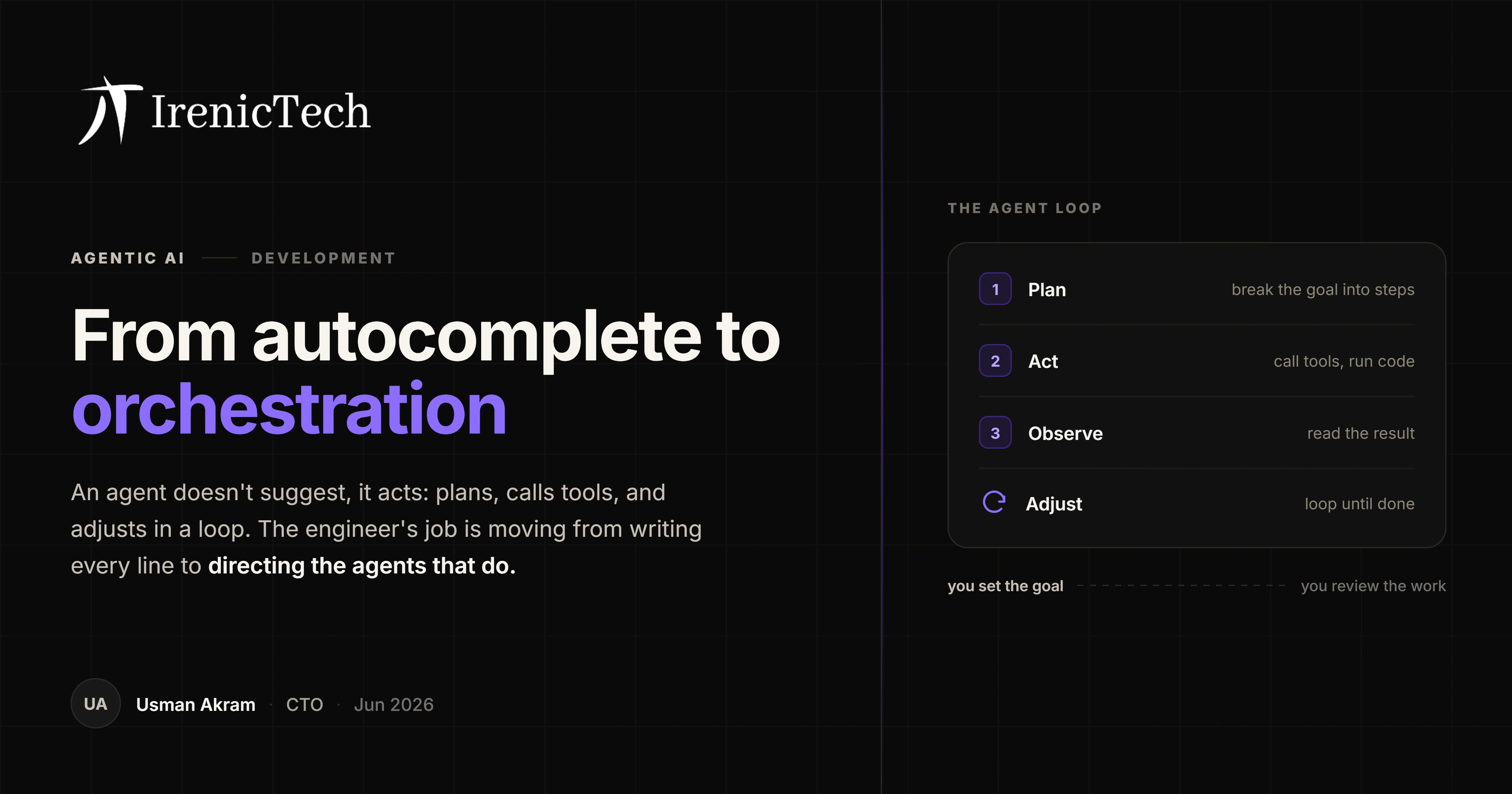
An AI agent is software that's given a goal, makes a plan, calls the tools it needs to carry it out, checks the result, and adjusts until the job is done. The difference from the AI most people have used is that an agent acts instead of just replying. It can push a task through a process, not just describe how the process is supposed to work.
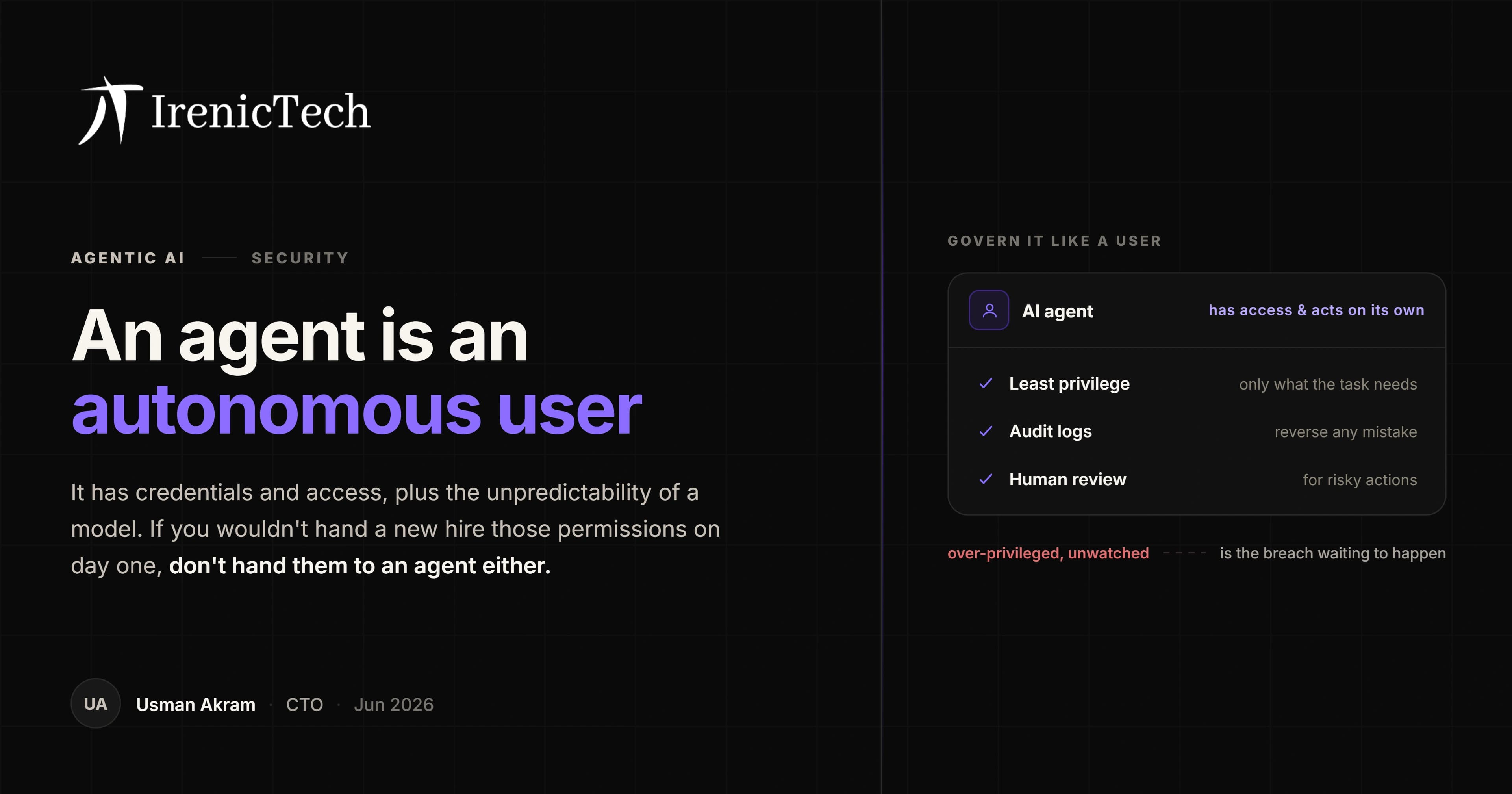
That's where the operational leverage comes from, and also where the risk lives. An agent with access to your systems and too little supervision is a liability, not a productivity gain. We've written a fuller explainer on what agentic AI development actually is in 2026 if you want the deeper version, but the short form is this: powerful, real, and only safe when it's governed.
Why this matters even if you're not in Dubai
The UAE operates as one tightly connected market. When Dubai's private sector raises its baseline, the expectation ripples outward, to suppliers, partners, and competitors across Sharjah, Abu Dhabi, and the rest of the Emirates. If you sell into Dubai-based firms or compete with them, their adoption curve becomes yours whether you planned for it or not.
There's a broader signal here too. Industry analysts expect roughly a third of enterprise software to include agentic features by 2028. Dubai's plan is a local, accelerated version of a global shift. The businesses that treat it as a two-year head start, rather than a deadline they'll meet later, are the ones that will be ready when their customers start asking.
What "getting ready" actually looks like
The temptation is to respond to a plan like this with a plan of your own that's equally grand, an AI strategy for the whole company. That's how most AI initiatives stall. The teams that get real value do the opposite. They start narrow and prove it.
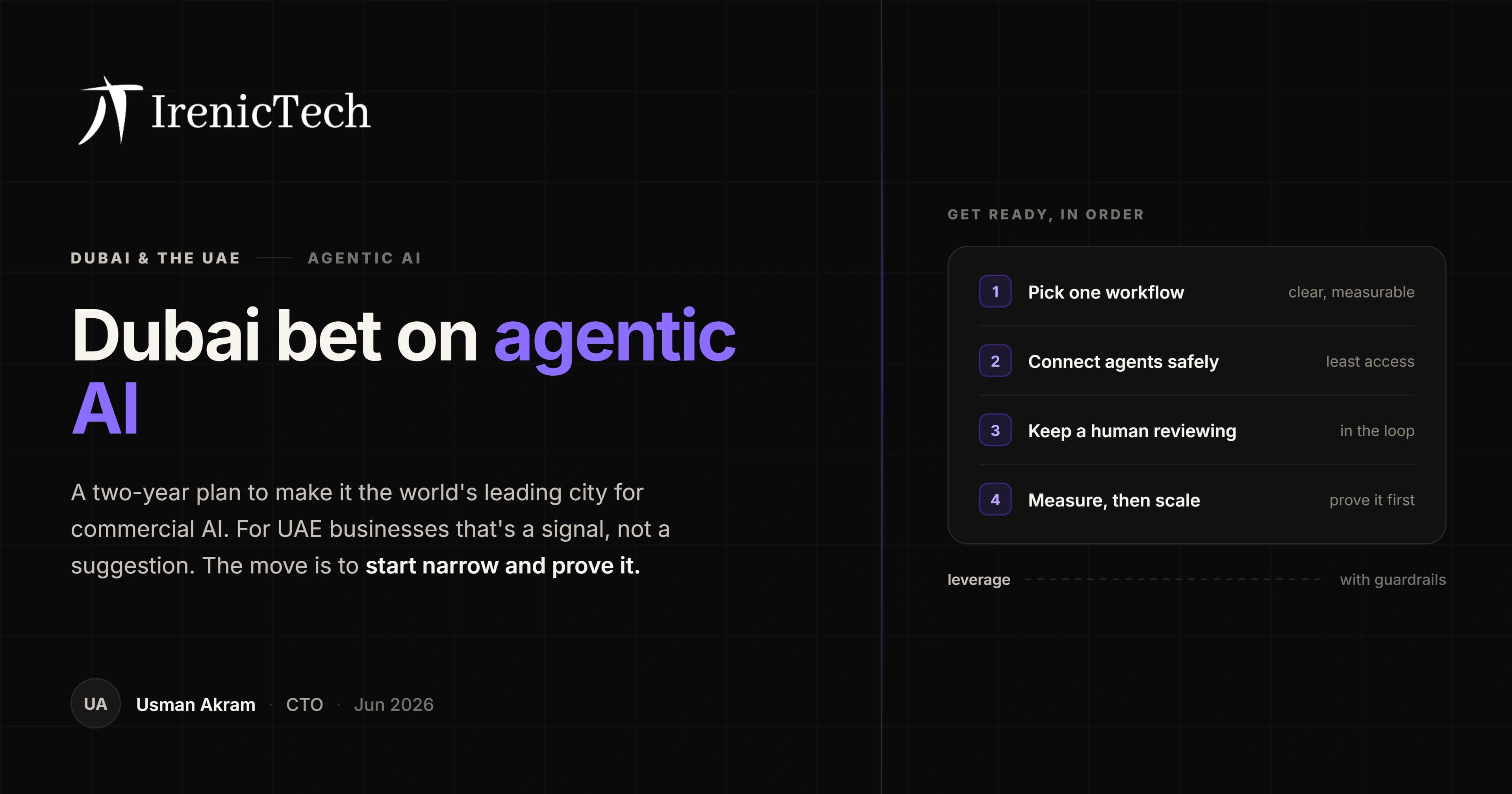
Here's the practical version:
- Pick one workflow, not ten. Choose a single process with a clear, measurable outcome, something repetitive and rules-heavy where an agent can save real hours. Quote-to-invoice, support triage, data reconciliation, document processing. One slice.
- Connect the agent to your systems safely. An agent is only useful if it can reach your real tools and data, and only safe if that connection is scoped. The emerging standard for this is MCP, which lets an agent use your systems through one governed interface with least-privilege access.
- Keep a human in the loop. The honest state of the technology in 2026 is supervised collaboration, not full autonomy. Even at the frontier, businesses delegate a fraction of a task to an agent and review the rest. Design for that from day one.
- Measure against the old way. Log what the agent does and compare the outcome to your current process, accuracy, time, cost. If it isn't clearly better, you've learned something cheaply.
- Then widen the scope. Only once you trust the loop do you expand to the next workflow. Adoption compounds when it's earned, not when it's mandated.
None of that requires waiting for a vendor's roadmap or a six-figure platform. It requires picking the right first problem and building the guardrails in from the start.
Where we sit
We build AI-native products from Sharjah, in the same market Dubai's plan is aimed at, so this shift isn't abstract for us. The work we like is exactly the kind the plan implies: taking one genuinely useful workflow, connecting an agent to a company's systems without opening a hole in the business, and getting it into production in weeks rather than quarters. That's the approach behind our AI-native engineering service, and it's deliberately the un-flashy version, one useful slice, shipped and measured, before anything ambitious.
Dubai's plan is a clear read on where the regional market is going. The question for most UAE businesses isn't whether to engage with agentic AI, but which first workflow is worth doing properly. If you want a straight answer for your case, tell us what you're working on and book a discovery call.
Frequently asked
What is Dubai's agentic AI plan?
In May 2026 Dubai announced a two-year action plan to integrate agentic AI into its private sector, with the stated ambition of becoming the world's leading city for commercial AI adoption. Agentic AI refers to AI systems that don't just answer questions but take actions: planning and completing multi-step tasks using an organisation's own tools and data, under human oversight. The plan positions AI adoption as a competitiveness issue for Dubai's economy.
What does Dubai's AI push mean for businesses in the UAE?
It means the bar for what 'modern' looks like is rising fast, and customers, partners, and regulators will increasingly expect AI-enabled operations. For most UAE businesses the practical takeaway is to identify one or two workflows where an agent can create real leverage, and build them properly, rather than waiting or bolting on a generic chatbot. Early, well-governed adoption is the advantage the plan is trying to create.
Does Dubai's agentic AI plan apply to companies in Sharjah and the wider UAE?
The plan is Dubai-led, but its gravity reaches the whole UAE. The Emirates operate as one tightly connected market, so a shift in Dubai's private sector raises expectations for suppliers, partners, and competitors across Sharjah, Abu Dhabi, and beyond. Any UAE business that sells into or works with Dubai-based firms should treat the direction as relevant to them.
How does a UAE business start adopting agentic AI safely?
Start narrow. Pick one workflow with a clear, measurable outcome, connect an agent to the specific tools and data it needs through a standard like MCP, give it the least access required, and keep a human reviewing its work. Log everything it does, measure the result against the old way, and only widen the scope once you trust the loop. The goal is leverage with guardrails, not autonomy for its own sake.
CTO, IrenicTech
Usman is the CTO of IrenicTech. He builds AI agents, RAG systems, and automations into web and mobile products, and gets them shipped in weeks instead of quarters. He's focused on AI that learns from the people using it, and that's secure enough to trust with real data.
Connect on LinkedIn